
A service unit of the University with the state-of-the-art learning resources and information technology.
To support the University’s present and future instructional learning and research needs through organized, relevant and fast delivery of information services.

College Librarian III
University Librarian
The Learning Resource Center (LRC) serves as a cornerstone of academic excellence and intellectual advancement within the university. In alignment with the institution’s core mission, the LRC is dedicated to empowering its diverse community of learners, faculty, and researchers by providing an expansive, carefully curated collection of resources alongside modern, accessible spaces that foster instruction, research, community extension, and lifelong learning.
Strategically located at the heart of the campus for optimal accessibility, the LRC features facilities built to exceed standard space requirements, thoughtfully designed to accommodate current academic demands as well as future institutional growth. The Center seamlessly serves both undergraduate and graduate communities, proudly housing a robust collection of over 40,000 volumes across its specialized holdings.
To uphold the highest standards of service and operational efficiency, the LRC thrives under the visionary leadership of its LRC Director (University Librarian), working under the guidance of the Vice-President for Academic Services. The Center’s dynamic operations are powered by a dedicated team of seven (7) licensed librarians and five (5) skilled support personnel—comprising a bookbinder, an exit inspection officer, and three (3) Contract of Service team members under the Department of Labor and Employment’s Government Internship Program (DOLE-GIP). The seamless daily operation, pristine hygiene, and welcoming atmosphere of the entire facility are diligently maintained by two (2) dedicated utility staff members.
In pursuit of unmatched service delivery, LRC personnel continuously participate in highimpact professional development programs, national training seminars, and specialized workshops. This relentless commitment to professional growth ensures that our staff remains at the forefront of modern information management, equipped with cutting-edge skills to serve clients at an optimum standard of excellence.
The goals and strategic objectives of the Learning Resource Center are dynamically realized through sustained, proactive efforts toward continuous improvement, driven by a steadfast dedication to researching, adapting, and pioneering progressive innovations in information services, technology, and library resource management.
Email Address
lrc@lnu.edu.ph
Telephone Number
–
Facebook Page
LNU Learning Resource Center
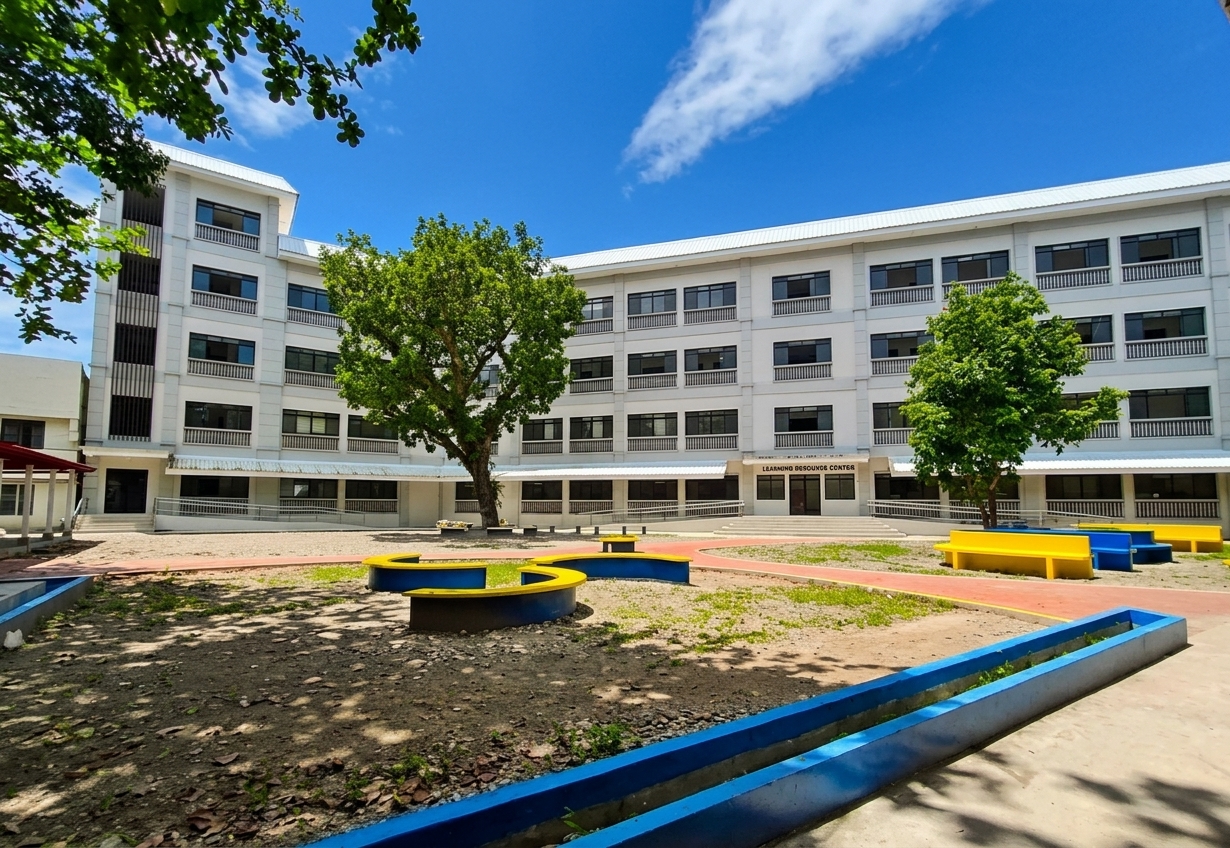
The history of the LRC coincides with that of Leyte Normal University, dating back to 1921 when the institution was established as the Provincial Normal School. Initially operating as a secondary school, it steadily expanded and became a two-year collegiate teacher-training institution in 1938. Known then as Leyte Normal School, it transitioned into a four-year degreegranting college complete with a training laboratory department in 1952, which housed a oneroom library.
On June 14, 1976, President Ferdinand E. Marcos Sr. signed Presidential Decree No. 944, converting the institution into Leyte State College and granting it an independent charter. This milestone led to rapid infrastructure development, including the construction of a high school building whose second floor housed both the High School and College libraries.
Following House Bill No. 944, introduced by Representative Cirilo Roy Montejo, Leyte State College was elevated to Leyte Normal University. In early 1994, a dedicated library building was constructed at its current location, named the Learning Resource Center (LRC), and officially inaugurated in December of that year with an initial collection exceeding 40,000 volumes.
In 1995, the Center expanded its holdings through external book donations and targeted acquisitions in preparation for Level I accreditation. By 1997, LNU attained Level II accreditation in Teacher Education and six Graduate School programs. Since then, the LRC’s facilities and resources have expanded significantly to provide patron-centered services. Following LNU’s designation as a Center of Excellence in Teacher Education, the Department of Science and Technology (DOST) awarded the LRC a ₱3,000,000 grant in 2004 for its library automation project, strengthening its vital role in supporting the university’s academic mission.
Currently, the LRC is being transformed into a modern, four-storey, state-of-the-art facility designed to serve the growing needs of the students, faculty, staff, and external users.

1. Readers / Circulation Service
The main hub for borrowing and returning library materials. It helps students find books, manages user accounts, and maintains organized shelves.
Key Features:
Borrowing & Returning: Handles loaning out books and accepting returned items, processed either manually (using student IDs and book cards) or digitally (by scanning barcodes on the computer system).
Shelving & Search Support: Assists users in searching the catalog (OPAC) and keeps books in proper order on the shelves.
2. Reserve Book Service
A dedicated service for high-demand course materials assigned by faculty.
Key Features:
Short-Term Access: Keeps required class readings behind the desk or in a designated section so all students get equal access.
In-Library Use: Materials are typically borrowed for short periods (such as an hour at a time) for reading or studying inside the library.
3. Reference Service
Personalized assistance to help readers locate specific facts, conduct research, and navigate information resources.
Key Features:
Research Assistance: Librarians answer factual questions, conduct detailed topic searches, and guide users to relevant books and indexes.
Online Reference Search Guidance: Guides students and researchers in searching and accessing appropriate online resources to support their academic assignments and research.
4. Library Orientation and Instruction
A foundational service designed to familiarize students and researchers with the library’s physical and digital landscape to help them navigate its offerings effectively.
Key Features:
Resource & Service Awareness: Introduces users to the full range of physical collections, online databases, and specialized library services available for academic support.
Policy & Facility Guidance: Educates patrons on essential library policies, operational procedures, and guidelines for properly utilizing library facilities and spaces.


Because I value this shared space of learning, growth, and discovery, I solemnly pledge to:
Protect Our Resources — I will handle all books and materials with care, refrain from damaging or misplacing items, and return borrowed materials on time for others to enjoy.
Respect the Silence — I will keep my conversations low, switch my mobile devices to silent mode, and honor every reader’s need for focus, quiet, and privacy.
Preserve the Environment — I will keep study areas clean, dispose of trash properly, refrain from eating inside, and push in my chair after use.
Care for the Facilities — I will treat all tables, shelves, technology, and equipment with mindfulness so they remain in excellent condition for future scholars.
Honor Our Community — I will show kindness, courtesy, and respect toward fellow library users and staff at all times, fostering a welcoming environment for everyone.
By keeping this pledge, I help ensure our library remains an empowering place for the entire academic community.
Staff and Personnel
At the heart of the Learning Resource Center is a skilled and certified team passionate about student and faculty success. From resource management to daily operations, our professionals work together seamlessly to ensure every patron receives expert guidance, efficient service, and an outstanding library experience.
| Staff Name | Position |
|---|---|
|
Ms. Luzviminda F. Alcober, R.L., MLIS |
College Librarian I – Graduate School Librarian |
|
Ms. Jan Tammy C. Naraja, R.L., MLIS |
College Librarian I – Technical Section |
|
Ms. Angelica A. Asis, R.L. |
Librarian I – Reference Section |
|
Ms. Mariel B. Balili, R.L |
Administrative Aide VI – In-Charge, Reserve Section |
|
Ms. Lauren Mae C. Sasi, R.L. |
Librarian Aide – In-Charge, Circulation Section |
|
Evelyn F. Perpiñan |
Administrative Aide IV – Bookbinder |
|
Ms. Maricel B. Daga, R.L. |
COS Employee – In-Charge, Undergraduate Theses |
|
Mr. Christopher Jude H. Coral |
In-Charge, Exit Inspection |
|
Ms. Angel D. Balintong |
Assistant In-Charge, Undergraduate Theses Section |
|
Ms. Pearly Dawn D. Tindugan |
Assistant In-Charge, Circulation Section and Reading Area |
|
Ms. Eloisa E. Galangue |
Assistant In-Charge, Exit Inspection and Graduate School Library |
